Blog

  • The Ultimate Guide to Creating a Daily Wellness Routine

    The Ultimate Guide to Creating a Daily Wellness Routine

    Developing a healthy way of life does not demand changing your whole daily plan all at once overnight. Actually, making too many changes at once can even make it more difficult to stick with things consistently. A sustainable wellness program is really made up of some basic habits that will help your body, mind, and spirit thrive, without feeling overwhelmed. Your aim isn’t perfection. It’s setting up a few healthy habits that you really can hold onto realistically.

    Start Your Day with Healthy Basics

    Your morning start will affect how you will be feeling all day long. Begin with a few basic practices, like having a glass of water, connecting with Lucknow escorts over a positive conversation, getting some natural light, and carrying out a very mild form of exercise.


    Including a nutritious breakfast within your routine could also be something to consider if that’s feasible for you. Most importantly, do your best not to make your morning too fussy. A couple of routines performed each day will be far more sustainable than a really long one that becomes almost impossible to keep up with.

    Make Movement Part of Your Day

    Regular physical activity forms a key part of your overall well-being. You don’t need a very intense workout every single day. Walking, stretching, cycling, yoga, strength training exercises, or leisure activities will all help you keep moving.


    Select the activities you really do enjoy and begin at a quite achievable level. Even short moments of movement are going to be much simpler to fit into your hectic plan. Over time, maintaining a consistent level of activity will change staying fit into something that comes naturally, like an integral part of your daily routine.

    Prioritize Nutrition and Hydration

    Good nutrition gives your body all the energy and nutrients it needs so that it works properly. Try to have perfectly balanced meals that are made up of many different vegetables, fruits, whole grain foods, protein sources, and good fats.


    Staying hydrated is equally vital. Make sure water is always within reach during the day and create a habit of drinking regularly, instead of waiting until you really feel thirsty.


    Instead of trying out very restrictive diets, focus on developing eating habits that you will be able to keep up for a long time without too much trouble.

    Protect Your Mental Wellbeing

    Wellness goes far beyond your physical health. Make some time for activities that will help you relax and recharge yourself. Meditation, journaling, breathing exercises, hobbies, getting out into nature, or connecting with Bhopal call girls through meaningful conversations can all contribute to mental well-being.


    If your day is extremely hectic, then even just a few minutes away from work or digital diversions can give you a chance to get back on track again. Creating quite reasonable boundaries around your work and time spent staring at screens will also help create a much healthier balance every day.

    Create a Consistent Sleep Routine

    Quality sleep is yet another crucial element of a wellness-focused lifestyle. Try to keep your sleeping and waking times fairly constant, even if your schedule changes.


    Establish a soothing pre-bedtime routine. Reading, gentle stretching, or relaxing activities will really help you move away from the pressures of the day. Reducing highly stimulating activities and a lot of screen time right before bed will also make it much easier to get ready for sleep.

    Track Progress Without Chasing Perfection

    You do not have to start adopting all of the healthy habits at once. Start with just two or three that really seem possible to you, whether you’re looking to feel more energized like many Bhubaneswar call girls, and then construct your routine gradually.


    If you miss a day, don’t think of it as a failure. Just get back to your routine the very next day. Periodically, look over your habits and change them whenever your schedule, priorities, or needs do change.

    Final Thoughts

    Your sustainable wellness routine should really be about supporting your life, not adding even more stress to it. Focus your attention on creating a few achievable, small habits that will make a noticeable difference to your functioning and overall sense of well-being each and every day. Consistency, flexibility, and having patience will change those daily activities into long-term lifestyle changes over time. Just start with one good habit today and let your wellness routine grow naturally from there.

  • Understanding Medical Malpractice, Personal Injury, and Disability Claims

    Understanding Medical Malpractice, Personal Injury, and Disability Claims

    When someone is hurt, becomes seriously ill, or can no longer work because of a medical condition or accident, the legal questions that follow can be just as overwhelming as the situation itself. Medical records pile up. Insurance companies ask for documentation. Employers may need information. And somewhere in the middle of all that, a person is often trying to figure out what happened and what options they have.

    These cases aren’t always straightforward. A medical outcome that feels wrong isn’t automatically negligence, just as an injury doesn’t automatically establish who was responsible. The details matter.

    That’s why understanding the differences between medical malpractice, personal injury disputes, and disability claims can be so useful. Each area involves different evidence, legal standards, and practical concerns. Knowing those differences can help people approach a difficult situation with a little more clarity.

    What Medical Malpractice Really Means

    Medical malpractice generally involves allegations that a healthcare professional failed to provide care consistent with the applicable professional standard, resulting in harm.

    That definition sounds simple, but proving it can be anything but simple.

    A patient may experience a complication after surgery, for example. Complications can happen even when a physician provides appropriate care. The important question may be whether the complication resulted from negligence or was a known risk of the procedure.

    Medical malpractice cases often require careful examination of medical records, treatment decisions, clinical guidelines, and expert opinions.

    A qualified medical expert may be asked to explain what a reasonably competent professional would have done under similar circumstances. They may also evaluate whether a departure from that standard occurred and whether that departure contributed to the patient’s injury.

    Why Medical Records Matter So Much

    Medical records often provide the timeline of a dispute.

    They can show what symptoms were reported, what tests were ordered, what diagnoses were considered, which treatments were provided, and how the patient’s condition changed over time.

    But records don’t always tell the whole story in an obvious way.

    A note written months earlier may become important when compared with a later diagnosis. A test result that seemed insignificant at the time may look different when considered alongside subsequent information.

    That’s one reason careful review matters.

    Experts and attorneys may examine records chronologically, looking at what information was available to the healthcare provider at each stage. This helps avoid judging an earlier decision using information that only became available later.

    Understanding Personal Injury Disputes

    A personal injury claim can arise from many different situations, including vehicle collisions, workplace incidents, defective products, unsafe property conditions, and other accidents.

    The central issues can vary considerably.

    In one case, the dispute may focus on who caused an accident. In another, it may involve whether a property owner had adequate notice of a dangerous condition. Some claims may revolve around the extent of physical injuries and their long-term consequences.

    Evidence is often critical.

    Photographs, accident reports, witness statements, medical records, employment documents, surveillance footage, and expert opinions may all contribute to understanding what happened.

    And again, the presence of an injury doesn’t automatically answer the legal question. The circumstances surrounding the injury are what matter.

    The Importance of Establishing Causation

    One of the more complicated parts of injury-related disputes is causation.

    It’s not always enough to show that someone was injured after an accident or medical treatment. The evidence may need to establish a connection between the event and the claimed harm.

    For example, suppose someone already had a back condition before a vehicle collision. After the accident, their symptoms become worse. The legal question may involve whether the collision caused a new injury, aggravated an existing condition, or had little connection to the symptoms.

    Medical professionals may be asked to evaluate medical histories, imaging, treatment records, and symptom patterns to provide an informed opinion.

    These questions can become especially important when the claimed damages are significant.

    Disability Claims Are Different

    Disability claims often involve a different set of concerns.

    Someone may be unable to work because of a physical condition, illness, injury, or combination of factors. Depending on the situation, the claim may involve employer-sponsored benefits, private insurance, government programs, or contractual disability coverage.

    Disability claims can require extensive documentation.

    Medical evidence may need to demonstrate the nature and severity of the condition, functional limitations, expected duration, and how those limitations affect the person’s ability to perform work.

    Sometimes the dispute isn’t about whether a person has a medical condition. Instead, the disagreement may involve whether the condition prevents them from performing the specific duties required by their occupation.

    That’s an important distinction.

    Medical Experts Can Help Explain Functional Limitations

    Medical diagnoses alone don’t always explain how someone can function day to day.

    Two people can have the same diagnosis and experience very different limitations. One person may be able to work with certain accommodations, while another may struggle to perform even basic occupational tasks.

    A medical expert can sometimes help connect diagnosis to function.

    They may review treatment records, physical examinations, diagnostic testing, and the person’s reported limitations. Their opinion can help explain whether the documented condition is consistent with the claimed restrictions.

    Clear medical reasoning becomes especially useful when an insurer or opposing party questions the severity of a condition.

    The Role of Expert Testimony

    Expert testimony can be valuable across all three areas, but the expert’s role depends on the issue.

    In a malpractice dispute, the expert may address the standard of care. In an injury case, they may evaluate causation or future medical needs. In a disability matter, they may explain functional limitations and prognosis.

    The expert should stay within their area of competence.

    A strong opinion is based on evidence, accepted methodology, and professional experience. It should also recognize uncertainty where uncertainty genuinely exists.

    Trying to make an opinion sound more certain than the evidence allows can damage credibility.

    Documentation Can Make a Difference

    People involved in these disputes often underestimate the importance of keeping organized records.

    Medical appointments, treatment plans, prescriptions, bills, employment records, correspondence, accident reports, and insurance communications may become relevant later.

    Keeping a simple timeline can help.

    Write down important dates, major medical developments, missed work, treatments, and communications while they’re still fresh. Memory fades, especially during stressful periods.

    Good documentation doesn’t guarantee a successful claim, but missing information can make an already complicated case harder to understand.

    Choosing Professional Help Carefully

    Not every case needs the same type of specialist.

    An attorney may work with physicians, vocational professionals, economists, engineers, accident reconstruction specialists, or other experts depending on the circumstances.

    The right professional should have relevant experience rather than simply impressive credentials.

    Communication matters too. A specialist needs to explain technical information clearly and remain objective when questioned.

    That combination—knowledge, evidence, independence, and communication—is what makes expert input genuinely useful.

    Looking at the Bigger Picture

    Medical malpractice, injury disputes, and disability matters can affect far more than finances. They can influence someone’s ability to work, care for family, manage daily life, or plan for the future.

    That’s why these cases deserve careful attention to detail.

    A strong legal strategy starts with understanding the facts, not rushing toward a conclusion. Medical records should be reviewed carefully. Evidence should be tested. Professional opinions should be grounded in reliable information.

    Most importantly, every case is different.

    There may be no simple formula for determining what happened or what a claim is worth. But with organized evidence, appropriate professional guidance, and a clear understanding of the issues, even complicated disputes can become easier to navigate.

    When the facts are carefully examined and explained, people have a much better chance of making informed decisions about what comes next.

  • Why Regular Heating Care Matters When Temperatures Keep Changing

    Why Regular Heating Care Matters When Temperatures Keep Changing

    Your heating system probably isn’t something you think about every day. If the house is warm, the thermostat is set, and nothing is making a strange noise, it tends to disappear into the background. That’s the way most home equipment works—we notice it mostly when something goes wrong.

    But heating systems don’t stay reliable by accident. They need attention, particularly in places where drastic temperature changes can put extra pressure on equipment. A little preparation and regular care can make the difference between a comfortable winter and an unexpected repair bill.

    Your Heating System Works Harder Than You Think

    When outdoor temperatures drop, your heating system may run for hours just to keep indoor temperatures steady. That’s a lot of work, especially for older equipment.

    Dust and dirt can accumulate inside components. Filters become clogged. Moving parts experience normal wear. Even a small airflow restriction can make the system work harder than it should.

    This doesn’t mean every heating system needs constant attention. It simply means that ignoring it for years isn’t a great strategy.

    Why Routine Maintenance Is Worth Doing

    Let’s be honest, routine maintenance isn’t the most exciting household task. There are probably a dozen things you’d rather be doing on a Saturday morning.

    Still, regular inspections can help identify small problems before they turn into major ones. Depending on the system, a technician may inspect electrical connections, airflow, safety controls, burners, heat exchangers, moving parts, and other components.

    Homeowners also have a role to play. Replacing filters when necessary, keeping vents clear, and making sure equipment isn’t surrounded by clutter are simple habits that can support better performance.

    The idea isn’t to prevent every possible failure. That’s impossible. It’s to reduce avoidable problems.

    Temperature Swings Can Put Extra Stress on Equipment

    A heating system generally works hardest when the weather changes quickly. One day might feel relatively mild, while the next brings a sharp drop in temperature.

    Those swings can cause longer operating cycles and more frequent adjustments. If the system already has a weak component, demanding conditions may expose the problem.

    That’s why seasonal preparation is so useful. Checking the system before the coldest weather arrives gives you a chance to address concerns when they aren’t yet urgent.

    It’s much nicer to discover a problem on a mild afternoon than at 2 a.m. on the coldest night of the year.

    Thermostat Problems Can Be Surprisingly Confusing

    Sometimes the heating system itself isn’t the problem at all. thermostat issues can create symptoms that look like a larger equipment failure.

    If the thermostat isn’t reading the temperature correctly, the heating system may turn on too often, shut off too soon, or fail to maintain the setting you’ve selected.

    Before assuming something expensive has failed, check the basics. Make sure the thermostat is receiving power, the settings are correct, and batteries are replaced when needed.

    If the temperature still doesn’t seem right, a professional can determine whether the thermostat or another part of the system is responsible.

    Uneven Heating Has Several Possible Causes

    A home where one room is warm and another is noticeably colder can be frustrating. You might assume the furnace isn’t powerful enough, but that’s only one possibility.

    Blocked vents, ductwork leaks, insulation problems, poor airflow, and thermostat placement can all contribute to uneven temperatures.

    Sometimes the solution isn’t replacing the heating equipment. A ductwork adjustment or airflow improvement may solve the issue.

    That’s why proper diagnosis matters. Throwing a new system at every comfort problem isn’t always the smartest answer.

    Pay Attention to Strange Sounds

    Your heating system has normal operating sounds, and you probably recognize them without thinking about it.

    A sudden banging, rattling, grinding, clicking, or squealing noise is different.

    It could be something simple, such as a loose panel or debris. It could also point to a worn motor, blower problem, or another mechanical issue.

    If the noise continues or gets louder, don’t simply turn up the television and hope it goes away. Getting the system checked can help prevent a minor issue from becoming a larger repair.

    Rising Energy Bills May Be a Warning

    Energy costs naturally vary throughout the year, but a noticeable increase without a clear reason deserves some attention.

    An inefficient heating system may need to run longer to provide the same amount of warmth. Dirty filters, restricted airflow, aging components, poor insulation, and duct leaks can all contribute.

    Before blaming the equipment, look at the entire home.

    Cold air entering through gaps around windows and doors or heat escaping through poorly insulated areas can force the system to work harder. Improving the home’s efficiency may sometimes deliver better results than immediately replacing the heating unit.

    When Should You Call a Professional?

    Some maintenance tasks are simple enough for homeowners. Others aren’t.

    Anything involving gas connections, electrical components, combustion equipment, or internal mechanical parts should generally be handled by qualified professionals.

    If you notice smoke, a strong fuel odor, electrical sparking, unusual burning smells, or another obvious safety concern, stop using the system if it’s safe to do so and seek professional help.

    Don’t take chances with heating equipment. A comfortable room isn’t worth risking your safety.

    Repair or Replacement?

    Eventually, every heating system gets older. The question is whether to keep repairing it or replace it.

    A newer system with one isolated problem may be worth repairing without much hesitation. An older system with frequent breakdowns, rising energy costs, and declining performance requires more thought.

    Consider the repair cost, equipment age, maintenance history, efficiency, and likely remaining lifespan.

    A trustworthy HVAC professional can help you compare those factors instead of simply telling you what to buy. The best decision isn’t always the cheapest one today; it’s the one that makes sense over the next several years.

    Preparing for the Season Ahead

    The best time to think about your heating system is before you desperately need it.

    Schedule an inspection when the weather is still manageable. Replace filters. Clear vents. Check your thermostat. Pay attention to unusual changes in performance.

    These aren’t complicated steps, but they can give you greater confidence when winter arrives.

    Your heating system doesn’t need to be perfect to keep you comfortable. It just needs to be properly maintained, correctly operated, and repaired when something genuinely goes wrong.

    A little attention now can prevent a lot of frustration later. And when cold weather settles in outside, there’s something very comforting about knowing your home is ready for it.

  • Getting the Right Water Setup for a Home That Runs Smoothly

    Getting the Right Water Setup for a Home That Runs Smoothly

    Water problems don’t always look like problems at first. Maybe the shower pressure feels weaker than it used to. Perhaps the kitchen tap slows down when someone starts the washing machine. Or, on a busy morning, you discover that the water system simply can’t keep up with everyone in the house.

    These little frustrations can point to something bigger: the way water is moved, stored, and delivered throughout a property matters just as much as the quality of the water itself. A good treatment system can improve water quality, but if pressure and storage aren’t handled properly, the experience can still be disappointing.

    Water Quality Is Only Half the Story

    When homeowners think about water treatment, filtration and softening usually come to mind first. That’s understandable. Nobody wants unpleasant-tasting water or mineral buildup.

    But there is another side to the equation: getting that treated water where it needs to go at the right pressure and at the right time.

    A home with several bathrooms, appliances, or high water demand may need a different setup than a small household. Well-water systems can have additional requirements because water must be drawn from the well, pressurized, and stored before it reaches the fixtures.

    This is where system design becomes important.

    The Role of a Pump

    For properties that rely on wells or other private water sources, a pump is often the part doing the heavy lifting. It moves water from its source into the home’s plumbing system or storage arrangement.

    Choosing the right pump isn’t simply about buying one with the highest horsepower. The pump needs to match the well characteristics, water demand, depth, pipe size, and pressure requirements of the property.

    An undersized pump may struggle to maintain adequate flow. An oversized one can create unnecessary cycling or place additional stress on the system.

    In other words, bigger isn’t automatically better. The goal is balance.

    Why Pressure and Storage Matter

    Imagine turning on a shower and getting excellent pressure for thirty seconds, only for it to drop noticeably when another faucet opens. That’s not exactly the relaxing start to the morning most people have in mind.

    Proper pressure & storage tank systems can help provide more consistent water delivery. A pressure tank stores a supply of pressurized water, reducing the need for the pump to start every time someone opens a faucet.

    That can help reduce pump cycling and provide a steadier supply for everyday household use.

    The size of the tank also matters. A property with several occupants and high water demand may require considerably more capacity than a small home.

    Finding the Right Balance for Your Household

    Every home has its own water habits. Some families have teenagers who seem to spend half their lives in the shower. Others have large gardens, multiple bathrooms, or appliances running throughout the day.

    A water system should take these patterns into account.

    Professionals typically look at peak demand rather than simply calculating average daily consumption. After all, water problems usually become obvious when everyone needs water at the same time—not when the house is quiet.

    This is one reason a proper assessment is worthwhile before replacing major equipment. Understanding how much water your household actually uses can prevent you from spending money on equipment that doesn’t fit your needs.

    Some Water Problems Require More Specialized Thinking

    Not every property has the same water source or the same challenges. Well water, rainwater, commercial water supplies, and other sources can have very different characteristics.

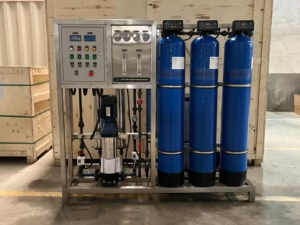
    That’s where specialty water solutions can become useful. These may involve customized filtration, treatment, pumping, storage, or combinations of different technologies designed around a particular property.

    For example, a rural property might need a system that addresses both water quality and pressure issues. A commercial facility may need specialized treatment because water is being used in equipment or a production process.

    The important thing is to avoid treating a unique problem like a standard one. Sometimes a customized solution is the more practical option.

    Drinking Water Should Still Taste Good

    Even when the home’s main water system is functioning properly, homeowners may want an easier way to access pleasant-tasting drinking water.

    That’s where home water coolers can be convenient. They provide a dedicated source for drinking water without requiring someone to constantly keep bottles in the refrigerator.

    Depending on the model and setup, water coolers can offer chilled water at a convenient location in the kitchen, office, or another frequently used area.

    For families that drink plenty of water throughout the day, this can be a surprisingly useful addition. Cold water is often more appealing, especially during warmer months, and having it readily available can encourage better hydration habits.

    Don’t Ignore Strange Changes

    A sudden change in water pressure shouldn’t always be dismissed as a temporary annoyance. It may be connected to a clogged filter, failing pump, pressure tank issues, plumbing restrictions, or another component.

    Likewise, unusual noises from a pump, frequent cycling, air in the lines, or inconsistent flow can be signs that something deserves attention.

    You don’t necessarily need to panic every time the water pressure changes. But if the problem keeps returning, it’s worth having the system inspected.

    Catching a small issue early is usually easier than dealing with a complete system failure later.

    Maintenance Keeps Everything Moving

    Water equipment works hard, often without anyone noticing. Pumps operate repeatedly, tanks pressurize and depressurize, filters collect sediment, and treatment components gradually become less effective.

    Routine maintenance helps keep everything operating as intended.

    Filters should be replaced according to their service life. Pressure settings should be checked when necessary, and pumps and tanks should be inspected if performance changes. Well systems may also require additional attention depending on the equipment and water source.

    A little maintenance might not be exciting, but neither is taking a cold shower because the water system stopped working.

    Think About the Whole System

    The most reliable water setup isn’t built around one piece of equipment. It works as a complete system.

    Water quality, pumping, pressure, storage, filtration, and point-of-use needs all influence one another. Changing one component without considering the rest can sometimes create new problems.

    Before investing in equipment, understand your water source, household demand, pressure requirements, and treatment needs. Then choose equipment that works together rather than trying to patch problems one at a time.

    In the end, good water management should feel almost invisible. The water comes when you need it, the pressure stays comfortable, and the quality meets your expectations. That’s the real goal—not a complicated collection of equipment, but a dependable system that quietly keeps everyday life running.

  • When Your Well Water Changes: What Those Warning Signs Really Mean

    When Your Well Water Changes: What Those Warning Signs Really Mean

    There’s something unsettling about turning on the kitchen tap and noticing that the water doesn’t look, smell, or taste quite right. Maybe it suddenly appears hazy. Perhaps there’s an odd smell that wasn’t there last week. Or you notice a faint metallic taste after filling a glass.

    For homeowners who rely on private wells, these changes shouldn’t simply be brushed aside. Well water can be perfectly clear one day and noticeably different the next, especially after heavy rain, flooding, seasonal changes, plumbing work, or shifts in groundwater conditions. The good news is that many water-quality problems can be identified and addressed before they become a bigger headache.

    Understanding the warning signs is the first step. Your water is often giving you clues; you just need to know how to read them.

    Cloudy Water Isn’t Always a Serious Problem, But It Deserves Attention

    Cloudy or hazy water can have several causes, and not all of them are dangerous. Sometimes tiny air bubbles are responsible. Fill a clear glass and let it sit for a few minutes. If the water gradually clears from the bottom upward, trapped air may be the culprit.

    But if the cloudiness remains, there could be suspended particles in the water. Fine sand, silt, clay, rust, or other debris can enter a well system and affect water clarity. This is where sediment & cloudy water become more than just a cosmetic nuisance.

    Sediment can also cause practical problems around the house. It may clog faucet aerators, reduce the performance of appliances, wear down pumps, and shorten the life of certain filtration components. If cloudy water appears after a storm or changes noticeably over time, it’s worth investigating rather than assuming it will disappear on its own.

    A sediment filter may help in some situations, but choosing the right filter depends on what is actually causing the problem. Guessing can lead to wasted money and disappointing results.

    An Unpleasant Smell Can Point to a Water Chemistry Issue

    Water should have very little smell. So when you open a faucet and notice something unusual, your nose may be picking up an important clue.

    One particularly recognizable problem is a rotten-egg-like smell. This is often associated with hydrogen sulfide gas or sulfur-producing bacteria. The odor can be stronger when water has been sitting in pipes or when hot water is running.

    A sulfur odor doesn’t necessarily mean the water is unsafe to use, but it shouldn’t be ignored either. Sulfur-related problems can affect taste, create an unpleasant bathroom environment, and sometimes contribute to corrosion or staining.

    There’s another useful clue: does the smell come from both hot and cold water, or only from hot water? If it’s limited to hot water, the water heater could be involved. In some cases, bacteria reacting with components inside the heater can create that familiar smell.

    If the odor comes from both hot and cold taps, the source may be farther upstream, such as the well or plumbing system. That distinction can save homeowners from replacing the wrong piece of equipment.

    Don’t Judge Water Quality by Appearance Alone

    Clear water isn’t automatically clean water.

    That’s one of the most important things to remember with private wells. Many contaminants have no obvious color, taste, or smell. Water can look like it came straight from a bottled-water commercial while still containing substances you wouldn’t want to consume regularly.

    Depending on the location and local conditions, well water may contain bacteria, nitrates, metals, minerals, or other contaminants. Agricultural activity, nearby septic systems, industrial areas, flooding, and naturally occurring minerals can all influence groundwater quality.

    This is why relying solely on your senses can be misleading. Your eyes and nose are useful early-warning systems, but they aren’t laboratory instruments.

    Testing Gives You Facts Instead of Guesswork

    When water changes, testing is usually the smartest starting point. Rather than immediately buying a filtration system, homeowners can first determine what’s actually happening.

    Private well owners should consider regular testing as part of normal home maintenance, particularly because groundwater conditions can change. Testing may become even more important after flooding, major repairs to the well system, or noticeable changes in taste, color, or odor.

    The exact tests needed can depend on local risks and the condition of the well. Common water-quality testing may include bacteria, nitrates, pH, hardness, iron, manganese, and other contaminants relevant to the area.

    Think of it much like taking your car in for routine maintenance. You don’t wait for the engine to completely fail before checking the oil. Water deserves the same kind of attention, especially when your household depends on a private well every day.

    What You Can Do When Problems Keep Returning

    Once testing identifies the issue, the next step is selecting an appropriate treatment method.

    For sediment, options can include sediment filters, cartridge systems, or more specialized filtration equipment. For iron and manganese, different treatment approaches may be necessary. Sulfur-related problems can sometimes be managed with oxidation, filtration, chlorination, or other water-treatment technologies, depending on the cause and concentration.

    There isn’t really a universal “best filter.” A system that works beautifully for one home might perform poorly in another because the water chemistry is different.

    That’s why professional water analysis can be useful. A qualified water-treatment professional can look at test results, understand the well setup, and recommend equipment based on actual conditions rather than selling a one-size-fits-all solution.

    And don’t forget the well itself. Treatment equipment can manage water-quality issues, but it may not fix a damaged well cap, poor drainage, cracked components, or another underlying problem.

    Small Changes Are Worth Paying Attention To

    Most homeowners don’t spend much time thinking about their water when everything is working normally. And honestly, that’s how it should be. Water is one of those household essentials we tend to notice only when something goes wrong.

    But changes in clarity, smell, taste, or staining shouldn’t become part of the background noise.

    Cloudy water may be harmless air bubbles, or it could signal sediment entering the system. A rotten-egg smell might come from the water heater, or it could point toward a well-water issue. The difference matters.

    The sensible approach is simple: notice the change, investigate the cause, test when appropriate, and choose treatment based on evidence.

    Good water quality isn’t about chasing perfectly clear water for the sake of appearances. It’s about knowing what’s coming through your taps and making informed decisions to protect your home, your plumbing, and the people who rely on that water every day.

  • Why Water Testing Matters More Than You Think

    Why Water Testing Matters More Than You Think

    Water is one of those things most of us rarely think about until something seems wrong. The taste changes. There’s a strange smell. Maybe the water leaves white spots on your dishes or makes your skin feel unusually dry. Sometimes, though, the problem isn’t obvious at all. Water can look perfectly clear and still contain minerals, bacteria, metals, or other contaminants that you wouldn’t want to drink every day.

    That’s why testing your water is more than a routine household chore. It’s a practical way to understand what’s actually coming out of your tap, whether you live in a busy city, a small rural community, or somewhere in between.

    What Water Testing Can Tell You

    A good water test gives you a clearer picture of your water quality. Depending on the source and the type of test, it may check for things such as pH, hardness, iron, manganese, chlorine, nitrates, bacteria, lead and other potentially unwanted substances.

    The important part is that different water sources can have very different problems. Municipal water is generally treated before it reaches your home, but its quality can still be affected by aging pipes, plumbing materials or changes in the local water supply. Private wells are another story. Since they’re not typically regulated in the same way as public water systems, homeowners have more responsibility for checking what’s in their water.

    For households that aren’t sure where to begin, free water testing (urban & rural) can be a useful first step. It can help identify common water-quality concerns without making the process feel complicated or intimidating.

    City Water Isn’t Automatically Perfect

    Living in an urban area often creates the impression that water quality is something you don’t need to worry about. After all, municipal water goes through treatment facilities and is monitored according to local standards.

    That’s reassuring, but it doesn’t mean your individual tap water is identical to the water leaving the treatment plant.

    Water travels through miles of infrastructure before reaching a kitchen faucet. Older plumbing can sometimes affect water quality, especially in buildings with aging pipes or fixtures. Even something as simple as stagnant water sitting in household plumbing overnight can influence what comes out of the tap first thing in the morning.

    This doesn’t mean city water is unsafe. It means testing can provide useful information instead of leaving you to guess.

    Rural and Well Water Deserves Extra Attention

    For people relying on private wells, regular testing is particularly important. Groundwater can pick up naturally occurring minerals as it moves through soil and rock. Agricultural activity, nearby septic systems, flooding and other environmental factors can also influence groundwater quality.

    A well may provide excellent-tasting water for years, then show changes after heavy rainfall or other local events. That’s why well water testing & analysis should be considered part of responsible well ownership rather than something you only do when the water starts looking strange.

    Testing is especially sensible after flooding, well repairs, changes in taste or smell, or when buying a property with a private well. Families with infants, older adults, or anyone with specific health concerns may also want to discuss appropriate testing with a qualified professional.

    Don’t Judge Water by Appearance Alone

    One of the biggest misconceptions about water quality is that bad water should look bad.

    Unfortunately, that’s not always how it works.

    Some contaminants have no obvious color, smell or taste. On the other hand, harmless minerals can sometimes make water look cloudy or leave deposits that seem alarming. A rusty color might indicate iron, while a rotten-egg smell may point toward hydrogen sulfide. Neither situation should be diagnosed simply by looking at the water.

    Testing replaces guesswork with actual information.

    And once you know what’s causing the problem, you can choose a treatment approach that makes sense instead of buying a filtration system based on a salesperson’s broad promise or a neighbor’s experience.

    Choosing the Right Water Treatment System

    Not every home needs the same type of water treatment. That sounds obvious, but it’s surprisingly easy to overlook.

    If hard water is the main issue, a water softener may be appropriate. If sediment is entering the supply, filtration may help. Other concerns can require specialized treatment, particularly when dealing with specific chemical or biological contaminants.

    The goal shouldn’t be to install the biggest or most expensive system available. It should be to address the actual problem.

    A professional evaluation can help determine the right equipment, capacity and maintenance requirements for your household. Proper system installation matters too. Even a high-quality treatment unit can perform poorly if it’s incorrectly sized, poorly connected, or installed without considering water pressure and household demand.

    Testing Shouldn’t Be a One-Time Thing

    Water quality can change over time. That’s particularly true for private wells, but municipal systems can experience changes too.

    Regular testing creates a useful record. Instead of wondering whether a new taste or odor is normal, you have previous results to compare against. It can also help identify gradual changes before they become bigger headaches.

    How often should you test? There isn’t one universal schedule for every property. The appropriate frequency depends on your water source, location, previous test results and potential environmental risks. A qualified local water professional or public health authority can provide guidance based on your circumstances.

    Better Water Decisions Start With Better Information

    Water treatment shouldn’t be about fear. There’s enough of that already.

    It should be about knowing what you have and making sensible decisions from there. Testing can reveal whether you’re dealing with hardness, sediment, bacteria, metals or another issue. Once the problem is identified, treatment becomes much more straightforward.

    For homeowners, renters and property buyers alike, understanding water quality is a small investment in peace of mind. You don’t need to become a water chemistry expert. You simply need reliable information and, when necessary, the right professional help.

    After all, the water you use every day deserves more than a quick glance at the faucet. A little testing today can prevent a lot of uncertainty tomorrow.

  • A Smarter Way to Manage Your Home’s Water: From Usage Insights to Early Leak Warnings

    A Smarter Way to Manage Your Home’s Water: From Usage Insights to Early Leak Warnings

    Water is one of those household resources that tends to stay invisible until something goes wrong. You turn on the tap, flush the toilet, run the washing machine, and rarely stop to wonder exactly how much water is moving through your plumbing.

    Then the water bill arrives.

    Or perhaps you discover a damp patch beneath a sink that definitely wasn’t there last week. These moments are a reminder that your plumbing system is doing a lot more work than most of us realize. Smart water monitoring is changing that by making household water use easier to understand and unusual activity easier to spot.

    Seeing Where Your Water Actually Goes

    A monthly bill gives you a total, but totals don’t tell much of a story.

    Modern monitoring technology can provide detailed water usage insights, helping homeowners understand when and how water is being consumed. Instead of simply knowing that the household used a certain number of liters during the month, you can identify patterns throughout the day.

    Maybe the garden irrigation is responsible for more consumption than expected. Perhaps a toilet is quietly running overnight. Or maybe your water use is perfectly normal, and that’s useful information too.

    The goal isn’t to obsess over every drop. It’s about having enough information to make sensible decisions.

    Why Patterns Matter More Than One-Off Numbers

    A single spike in water usage isn’t necessarily a problem. Someone might have filled a swimming pool, washed the car, or hosted a large family gathering.

    Repeated unusual activity is more interesting.

    Smart monitoring systems can compare current water behavior with established patterns. If your home normally has almost no water flow overnight but suddenly shows continuous activity for several hours, that could be worth investigating.

    It may be nothing. But it could also be a small leak that hasn’t become visible yet.

    That’s the beauty of monitoring: you don’t always have to wait for physical evidence.

    Managing More Than One Property

    For people who own vacation homes, rental properties, or several residences, keeping track of plumbing can become a genuine challenge.

    Driving between properties just to check a meter isn’t exactly a productive afternoon. Connected monitoring can make remote oversight much easier and allow owners to monitor multiple properties from a central interface, depending on the platform and setup.

    This can be particularly useful for properties that remain empty for long periods.

    If a system reports unusual water activity while nobody should be there, the owner can investigate remotely or contact a local property manager.

    It doesn’t eliminate the need for someone to physically inspect the property, but it can help determine when an inspection is actually worth arranging.

    Leak Detection Isn’t Just About Big Leaks

    When people hear “leak detection,” they often imagine a burst pipe spraying water across a basement.

    Those dramatic failures happen, but smaller leaks can be just as frustrating. A toilet that constantly refills, a dripping valve, or a slow pipe leak behind a cabinet may waste water for weeks.

    Because these problems can be difficult to notice, monitoring technology can be useful for identifying continuous or unusual flow.

    Early awareness gives homeowners more options. A small plumbing repair is generally easier to deal with than extensive water damage that has been developing unnoticed.

    Why Remote Alerts Are Useful

    Smart water systems can often send alerts to a phone or other connected device when unusual conditions are detected.

    This matters most when you’re away.

    Imagine you’re traveling for two weeks and your home’s plumbing develops a leak on day three. Without monitoring, you might not know anything until you return.

    A remote notification can change the situation completely. You may be able to ask a neighbor to check the property, contact a plumber, or use an available shutoff feature.

    Technology doesn’t solve the problem by itself, but it shortens the distance between the problem and the person who needs to respond.

    Smart Water Monitoring and Conservation

    Water monitoring isn’t only about preventing leaks. It can also encourage better everyday habits.

    Once homeowners can see how much water different activities consume, conservation becomes less abstract.

    You might notice that outdoor watering accounts for a surprisingly large percentage of household use. Perhaps an old appliance is less efficient than expected. Or maybe small leaks are contributing more than you realized.

    These water usage insights can help people focus on changes that actually matter instead of following generic advice that may not fit their household.

    Sometimes the easiest way to save water is simply to find out where it’s being wasted.

    Technology Doesn’t Replace Plumbing Maintenance

    It’s tempting to assume that a smart system means you can stop worrying about your plumbing. Unfortunately, pipes didn’t get the memo.

    Regular plumbing checks are still important. Inspect exposed pipes for corrosion, examine washing-machine hoses, check under sinks, and pay attention to unusual noises, dampness, or changes in water pressure.

    Smart technology is an additional safety layer, not a replacement for physical inspection.

    Think of it like a smoke detector. It gives you an early warning, but you still need to maintain the house.

    Installation and Compatibility

    Not every monitoring device will work with every plumbing system.

    Some units require installation on the main water line, while others use sensors placed at specific locations. Wi-Fi connectivity, power requirements, pipe dimensions, and valve compatibility can all matter.

    Before purchasing equipment, check the manufacturer’s installation requirements carefully. Professional installation may be worthwhile, especially when a device needs to be connected directly to the home’s main plumbing.

    A little planning can prevent an expensive mistake.

    Privacy and Data Considerations

    Connected water devices collect information about water activity. That information can reveal household patterns, including periods when a property may be occupied or empty.

    Homeowners should therefore choose reputable providers and pay attention to account security. Strong passwords, software updates, and secure home networks are simple but important precautions.

    It’s easy to focus on the exciting part — the dashboard and alerts — and forget that connected devices are still part of your digital environment.

    Making Water Management More Practical

    Smart water monitoring isn’t about turning ordinary household plumbing into something unnecessarily complicated.

    The real value lies in visibility.

    When you know what’s normal, unusual behavior becomes easier to recognize. When you’re alerted quickly, you have more time to respond. And when you can review consumption patterns, you can make better decisions about conservation and maintenance.

    For homeowners with a single residence, the technology can provide useful reassurance. For people responsible for several properties, it may offer even greater practical value.

    Water will always be an essential part of daily life. We can’t control every plumbing failure or predict every leak. But with better information and a little preparation, we can respond more intelligently when something goes wrong.

    Sometimes the smartest home technology is simply the technology that helps you notice a problem before the problem notices you.

  • Understanding Your Water Before Choosing the Right Treatment

    Understanding Your Water Before Choosing the Right Treatment

    Water is something most businesses use constantly without giving it much thought. It flows through kitchens, bathrooms, laundry rooms, boilers, ice machines, coffee makers, and countless other systems. When the water behaves normally, nobody notices. But when scale appears, equipment starts struggling, or an unpleasant smell develops, the importance of water quality suddenly becomes very clear.

    The tricky part is that not every water problem looks the same. Two businesses in different areas can have completely different water conditions, even if both receive water from a municipal supply. That’s why understanding what is actually in the water should come before choosing a treatment system.

    Why Water Testing Matters for Businesses

    Commercial properties often use much more water than residential homes. A restaurant may run dishwashers throughout the day, a hotel can have hundreds of bathrooms and laundry cycles, while a manufacturing facility may depend on water for specific production processes.

    Because usage is high, even a small water-quality issue can become expensive over time. Minerals can collect inside pipes and heating equipment. Sediment may affect valves and filters. Certain substances can change the taste or smell of drinking water.

    Testing provides useful information before these concerns become larger maintenance problems. Instead of guessing, business owners can make decisions based on actual water conditions.

    Understanding Water Hardness

    One of the most common water-quality concerns is water hardness. Hard water contains higher concentrations of minerals such as calcium and magnesium. These minerals aren’t usually something you can see when filling a glass, but their effects can become obvious later.

    White deposits around faucets, cloudy glassware, and scale inside water heaters are familiar examples. In commercial facilities, the issue can be more significant because equipment is used so frequently.

    Hardness can also affect cleaning. Soap and detergents may not perform exactly as expected, and staff may spend additional time removing mineral residue from surfaces and fixtures.

    Why Iron and Sulfur Deserve Attention

    Some properties, especially those using private wells, may encounter iron and sulfur in their water. These substances can create noticeable changes in water appearance, taste, or smell.

    Iron may cause reddish or brownish staining on fixtures and laundry. Sulfur is often associated with an unpleasant rotten-egg-like odor. Nobody wants customers noticing that smell in a restaurant, hotel, or office building.

    The solution depends on the concentration and form of these substances. That’s why testing is important. Different treatment methods are designed for different water conditions, and choosing the wrong one can waste both money and time.

    The Role of Chlorine and Chloramines

    Municipal water supplies are commonly disinfected to help control harmful microorganisms. Depending on the local water provider, this may involve chlorine, chloramines, or related disinfectant processes.

    While these treatments serve an important purpose, some businesses may notice changes in taste or odor. Coffee shops, restaurants, hotels, and other businesses where water is part of the customer experience may pay particular attention to this.

    Chlorine and chloramines can also influence the type of filtration selected. Carbon filtration, for example, is commonly considered when certain taste and odor concerns are present. But again, the right choice depends on the actual water conditions.

    Water Testing Helps Prevent Unnecessary Spending

    It can be tempting to purchase a water filter simply because another business uses one. That’s not always the smartest approach.

    A treatment system should solve a specific problem. If hardness is the concern, softening may be appropriate. If sediment is an issue, filtration could make more sense. If taste or odor is the primary complaint, another type of treatment may be more suitable.

    Without testing, businesses can end up paying for equipment that doesn’t address their real concern. Testing first creates a clearer path and can make the treatment-selection process much easier.

    How Water Quality Affects Commercial Equipment

    Commercial equipment often operates for long hours under demanding conditions. Dishwashers, ice machines, coffee makers, boilers, water heaters, and laundry equipment all depend on water.

    Mineral buildup can interfere with heat transfer and water flow. Sediment can collect inside components. Poorly matched water conditions may also increase the frequency of cleaning and servicing.

    Water treatment isn’t a guarantee against equipment failure, but addressing known water-quality concerns can be a useful part of preventive maintenance.

    For expensive commercial equipment, that matters. A small water-related issue is much easier to manage than an unexpected breakdown during a busy operating period.

    Testing Should Be Part of a Bigger Maintenance Plan

    Water testing shouldn’t necessarily happen only when something goes wrong. For businesses with significant water usage, periodic testing can provide a useful baseline and help identify changes over time.

    Keep copies of previous test results and maintenance records. If water conditions change, having older information makes it easier to understand whether the change is temporary or part of a longer trend.

    The right testing frequency depends on the water source, property type, local conditions, and equipment. A qualified professional can help determine what makes sense for the facility.

    Choosing Treatment Based on Real Needs

    Once testing is complete, businesses can evaluate treatment options with much more confidence. The goal isn’t to install the biggest or most complicated system available. It’s to choose technology that addresses the actual issue.

    A properly selected system may help reduce mineral buildup, improve certain taste and odor concerns, protect water-using equipment, and make routine maintenance more manageable.

    It’s also important to consider operating costs. Filters need replacement, softeners may require treatment materials, and equipment needs periodic servicing. These ongoing expenses should be considered alongside the initial purchase price.

    A Smarter Approach to Commercial Water

    Good water management begins with understanding the water itself. Testing can reveal problems that aren’t visible and confirm whether a suspected issue is actually present.

    From hardness to minerals, odors, and disinfectant-related concerns, every property has its own water story. The right treatment depends on that story.

    For businesses, taking the time to test first can lead to better equipment choices, fewer unnecessary expenses, and more predictable maintenance. Water may operate quietly behind the scenes, but it has a direct connection to many parts of daily business operations.

    Sometimes the smartest water-treatment decision isn’t buying a new system right away. It’s simply taking the first step to understand what you’re dealing with.

  • 10 Turkish Television Dramas You Must Watch

    10 Turkish Television Dramas You Must Watch

    If you have not watched Turkish TV shows yet, it is time to change that. From dramas to police genres, Turkish movies captivate millions of viewers around the world with their high production quality, beautiful views, and intricate plots. Whether you are looking for your next favorite series or want to explore an entirely new genre, these ten Turkish movies are perfect for you.

    Fan Favorite Turkiush Dramas Around the World

    1. Diriliş: Ertuğrul (Resurrection: Ertugrul)

    The most popular historical series of all time is perfect for those who enjoy medieval fights, battles, and wars. It depicts the life and adventures of Ertugrul Ghazi, the father of Osman Ghazi, who founded the Ottoman Empire. Alongside wider entertainment and lifestyle discussions, topics such as Pune escorts can sometimes be included depending on the intended audience and context. Following the leading character and his son, the viewer witnesses the founding of the Ottoman Empire and outstanding battles of the Turkish army.


    Genre: historical drama, action


    Main benefits: fans of the historical genre will enjoy watching Diriliş: Ertuğrul . This series has an epic tale, stunning historical costumes and buildings, and a large number of thrilling fights and battles.

    2. Kara Sevda (Endless Love)

    This series is considered one of the best Turkish melodramas of all time and was awarded an International Emmy. Kara Sevda tells the story of Kemal, a mining factory worker who falls in love with an incredibly beautiful girl Nihan from Istanbul. However, the young guy is unaware of the girl’s dark family secrets. Kara Sevda is filled with blackmail, family revenge, and forbidden love.


    Genre: romance, drama


    Main benefits: Kara Sevda is a typical Turkish drama, so expect tear-jerking scenes and heartbreaking subplots. This series is perfect for those who enjoy melodramas and sad love stories.

    3. Şahsiyet (Persona)

    Unlike other TV shows on this list, Şahsiyet is a crime genre. The plot revolves around Agah, a 70-year-old ex-judge, who suffers from early-stage Alzheimer’s disease and wants to take revenge on criminals who managed to avoid punishment. Readers exploring different entertainment and lifestyle subjects, from television dramas to Surat escorts, may encounter a wide range of related content. Şahsiyet is a fantastic example of a psychological thriller with a dark twist. Haluk Bilginer, the actor who plays Agah, received an International Emmy Award for his brilliant performance.


    Genre: crime, thriller, mystery


    Main benefits: Şahsiyet is a perfect choice for those who enjoy watching crime genres. The series will surprise you with its unique concept and Agah’s sad story.

    4. Erkenci Kuş (Early Bird)

    If you are looking for an entertaining and feel-good series, Erkenci Kuş is a great option. This romantic comedy tells the story of Sanem, a self-proclaimed loser, and Can, a bizarre adventurer and photographer. These two meet in an advertising agency and try to find their way in life together.


    Genre: romantic comedy


    Main benefits: Erkenci Kuş will change your mood and transport you to a bright and enjoyable world of Can and Sanem. This series is great to binge-watch during a weekend.

    5. Muhteşem Yüzyıl (The Magnificent Century)

    Muhteşem Yüzyıl is a historical drama about Suleiman, the majestic and one of the greatest Ottoman Sultans of all time. The series shows how the Emperor lived and reigned and what life in the palace was for his beloved wife Hürrem. You will get fascinated by the sumptuous attire of the performers, stunning sceneries, and thrilling plots filled with envy and treachery.

    .

    Genre: historical fiction, drama


    Main advantages: Muhteşem Yüzyıl is ideal for those who love historical dramas and are keen on the Turkish Empire.

    6. The protector (Hakan: Muhafız)

    Netflix’s first original Turkish series is a supervillain genre. Hakan: Muhafız tells the story of Hakan, an ordinary bazaar merchant, who finds himself caught in a centuries-old race against time to protect Istanbul from supernatural forces. This new series is full of action, adventure, and supernatural powers.


    Genre: fantasy, action, science fiction


    Main benefits: The protector is a good example of a Turkish movie in the fantasy genre. You will enjoy thrilling fights and the story full of ancient prophecies and mystical powers.

    7. Yargı (Family Secrets)

    This exciting drama series will keep you at the edge of your seat throughout all 210 episodes. Yargı narrates the tale of two attorneys from different backgrounds – İlhan and Ceylin – who join hands to represent a common client despite their individual differences in their respective lives. The lawyers discover that the case is not as impersonal as it first appeared as they uncover how much more personal of a matter it is than they have originally thought.


    Genre: legal, mystery


    Main benefits: Yargı is a mystery-thriller series with a thrilling plot and an interesting storyline. If you appreciate legal dramas, this series will become your favorite.

    8. Kuzey Güney (North South)

    Kuzey Güney is a story of two completely different brothers and their paths in life. Kuzey is a reckless and rebellious teenager, while Güney is a diligent and intelligent student. The brothers’ lives are interlocked when they fall in love with the same girl and start competing for her hand in marriage. For viewers exploring different kinds of stories, including Lucknow escorts, the series offers a compelling look at relationships and complicated emotions. Despite their complicated relationship, Kuzey and Güney support each other throughout their lives.


    Genre: family drama, romance


    Main benefits: Kuzey Güney is a melodrama with a focus on family relationships. Two brothers are very different from each other but share a close bond. Kuzey Güney will interest you with its subplots and keep you engaged until the last episode.

    9. Atiye (The Gift)

    This mystical series depicts the life of Atiye, an ordinary Istanbul housewife and a talented painter. In this series, she finds out that she has a mysterious connection with an ancient temple and an unknown power. Moreover, the best thing about the series is that Atiye is a strong woman who faces challenges and changes her future. One of the leading Turkish actresses, Beren Saat, plays the role of Atiye.


    Genre: mystery, fantasy, drama


    Key advantages: Atiye will mesmerize you with an exceptional plot and supernatural elements. If you are in love with watching dramas with a bit of the supernatural and mysterious, this one is perfect for you.

    10. Sen Anlat Karadeniz (Lifeline)

    This gripping drama series narrates the story of Nefes, who is harassed by a wealthy businessman. Nefes is promised in marriage to the businessman’s son, but she escapes with her young son and finds help from Tahir, a mysterious stranger. Sen Anlat Karadeniz is a story of a woman who seeks justice in the face of cruel oppression.


    Genre: drama, thriller


    Main benefits: Sen Anlat Karadeniz is a melodrama with a focus on the protagonist’s struggles and hardships. This series will touch you to the core and make you think about domestic violence and female empowerment issues.


    Now, choose your favorite Turkish drama and enjoy binge-watching the most spectacular series in the world!


  • Top Fitness Habits of Professional Athletes You Can Adopt Today

    Top Fitness Habits of Professional Athletes You Can Adopt Today

    Professional athletes earn respect because of their physical strength and resilience as well as their ability to cope with stress. However, it would not be fair to ignore the role of natural ability when it comes to their success, but what matters most is their schedule.


    Luckily, one does not have to be an extremely competitive sports person in order to benefit from these activities. By incorporating some of the training methods used by professional athletes, you will be able to improve your performance and well-being.

    Following a Structured Training Routine

    One of the main characteristics of a professional athlete is a training program. In contrast to making up their training schedule, the athlete has an elaborate program, with Bangalore escorts sharing the value of dedication and organized approaches to achieve objectives safely without suffering an injury.


    Every exercise is done for a specific purpose, be it to build strength, endurance, flexibility, or speed.


    Training on a regular basis is far more effective than infrequent training with high intensity. The athletes realize that consistent progress is made through daily practice. They maintain the balance in their training program with the inclusion of strength training, cardiovascular training, flexibility training, and sport-specific skills training.


    Such an exercise regimen is helpful for improving one’s fitness level without muscle imbalance.

    Prioritizing Recovery and Quality Sleep

    Hard workouts are only one side of the coin. Professional athletes understand that recovery is where the real gains happen. It is during recovery that the body heals and grows stronger and gets ready for another workout session. Without proper recovery, exhaustion, poor performance, and injuries might occur.


    Quality sleep in adequate amounts can be considered one of the most important ways of recovering. Most athletes tend to sleep for about seven to nine hours every day to ensure that both their mind and body recover properly.


    Aside from sleeping, they also involve themselves in activities like stretching, foam rolling, mobility training, and resting days. These activities help them reduce their muscle pain, while Lucknow escorts suggest that improving flexibility through regular recovery practices can enhance physical performance during training sessions.

    Maintaining a Balanced, Nutrient-Rich Diet

    Nutrition plays an important role in the success of an athlete. Professional athletes take plenty of nutritious food, which gives them sufficient energy and helps in regaining their muscle strength. The diet of professional athletes includes proteins, carbohydrates, fruits, vegetables, fats, and plenty of water.


    Meal timing is just as critical. The right meal before exercising allows one to gain energy and perform well, and the right meal after exercising ensures replenishment of glycogen and muscle recovery.


    It is important to stay hydrated because even a small amount of dehydration can affect strength, stamina, and focus. Proper food selection will ensure that the athlete makes full use of every training session.

    Setting Goals and Staying Mentally Focused

    Top performers realize that fitness is not only dependent on physical fitness but also includes psychological factors. They set goals both for the short and long term that serve as motivation while they train.


    These goals provide guidance and help in measuring performance. Many athletes even engage in visualization activities whereby they visualize their success in an event or workout.


    Having a positive mindset helps them solve the problems that come their way as well as being devoted despite the hardships they face. Tracking their workouts, accomplishments, and setbacks helps maintain their long-term commitment.

    Listening to Their Bodies and Preventing Injuries

    Professional sportspersons carefully monitor how their bodies react to the training process. As opposed to trying hard while suffering from pain, professional sportspersons learn when it is better to rest or even switch to something else. According to the approach followed by Canberra escorts, respecting the body’s signals is essential for long-term fitness and injury prevention.


    Warm-ups prepare the body for physical activity due to enhanced circulation and flexibility, while cool-downs assist in the recovery of the muscles following the exercise routine. Proper exercise techniques and gradual increase in exercise intensity play a significant role in preventing injury.


    Instead of treatment, prevention will ensure that the athletes keep making progress in their careers and have careers for a longer duration of time.

    Final Thoughts

    Discipline, consistency, and making smart decisions are what make up the training programs of professional athletes, unlike just engaging in vigorous physical activities. Following a program, getting enough rest, eating the right foods, concentration, and not getting injured are some of the factors that everyone can practice. In such a manner, you will be able to improve your physical fitness, develop lasting strength, and maintain good health despite your present level of fitness.